- 20 actividades en cada Cuaderno para aprender
y mejorar tu inglés -
*¿Estás empezando a aprender inglés?
Con tu suscripción Premium, puedes acceder al Método para
aprender inglés Paso a Paso para aprender desde lo más básico.
y también al
curso completo de inglés niveles Iniciación, Básico, Intermedio y
Avanzado
así como descargar sin coste el producto Fichas Visuales de inglés desde nuestra
tienda Patreon.
También tienes acceso exclusivo a un
CURSO COMPLETO DE INGLÉS PRÁCTICO: (Podcast + PDFs). NIVELES INICIACIÓN,
BÁSICO,
INTERMEDIO y AVANZADO.
Tu suscripción Premium cuenta con
muchas ventajas adicionales.
*La suscripción Premium tiene el acceso directo a los
recursos Premium completos
Para escuchar los audios haz 'clic' en el control
multimedia o en el "speaker".
El speaker te permite además, con el botón derecho de tu ratón, guardar el
fichero de sonido en tu equipo.
Asocia cada imagen con la definición más apropiada.
*Recuerda que puedes acceder al contenido completo de la
sección de
Comprensión de audio Básico con tu suscripción Premium
Choose the best answer for the following
sentences.
1. This exercise is
than the last one.
2. Could you me your pen for a moment?
3. By the time we arrived, the film .
4. She told me that she tired.
5. I need to buy a new pair shoes.
Choose the best answer for the following
sentences.
1. We haven’t finished the project
.
2. The book was so interesting that I couldn’t .
3. If I would the answer, I would tell you.
4. They’ve been married 2015.
5. I’m not sure what this word means. I’ll in the dictionary.
*Recuerda que puedes acceder al contenido completo de la
sección de
Comprensión de audio Intermedio con tu suscripción Premium
Choose the best words to complete the sentences.
1. Little about the consequences of his actions.
2. The company aims to its market share over the next year.
3. He denied involved in the incident.
4. The project was completed ahead schedule.
5. She has a reputation being highly reliable.
1. He was accused leaking confidential information.
2. The situation calls immediate action.
3. She’s very good at excuses when she’s late.
4. If I about the traffic, I would have left earlier.
5. The new employee quickly into the team.
*Recuerda que puedes acceder al contenido completo de la
sección de
Comprensión de audio Avanzado con tu suscripción Premium
Business English
Choose the best word for each sentence.
1. We need to a decision before the end of the week.
2. The company plans to into new international markets next year.
3. We are looking for ways to costs without affecting quality.
4. The sales team exceeded its quarterly by 15%.
5. Before signing the agreement, both parties must the conditions carefully.
Generalidades sobre el uso de los adjetivos en inglés
Los adjetivos son palabras que sirven para describir o aportar información sobre
un sustantivo. Pueden expresar cualidades, estados, tamaños, colores, formas,
edades, opiniones, procedencias y muchas otras características. Aunque cumplen
una función similar en inglés y en español, existen importantes diferencias
gramaticales en cuanto a su forma, su posición y su combinación con otros
elementos de la oración.
1. Los adjetivos ingleses no varían en género ni en número
Una de las diferencias más importantes entre el inglés y el español es que los
adjetivos ingleses son invariables. Esto significa que no cambian según el
género o el número del sustantivo al que acompañan.
En español decimos:
un coche rojo
una casa roja
unos coches rojos
unas casas rojas
El adjetivo «rojo» cambia a «roja», «rojos» o «rojas». En inglés, en cambio, el
adjetivo mantiene siempre la misma forma:
a red car - un coche rojo
a red house - una casa roja
two red cars - dos coches rojos
three red houses - tres casas rojas
Por tanto, no debemos añadir una -s al adjetivo cuando el sustantivo está en
plural. Una construcción como reds cars sería incorrecta. Lo correcto es:
They have two beautiful children. - Tienen dos hijos preciosos.
El adjetivo beautiful no cambia, aunque children sea plural.
2. Posición del adjetivo delante del sustantivo
En inglés, los adjetivos suelen colocarse delante del sustantivo que describen.
Esta posición se denomina posición atributiva.
She has a beautiful voice. - Tiene una voz bonita.
We live in a small apartment. - Vivimos en un apartamento pequeño.
He bought an expensive computer. - Compró un ordenador caro.
They visited an old castle. - Visitaron un castillo antiguo.
En español, el adjetivo suele aparecer después del sustantivo, aunque también
puede colocarse delante por motivos expresivos o estilísticos. En inglés, sin
embargo, la posición normal es anterior al nombre.
Por esta razón, no se dice normalmente:
a house beautiful
La forma correcta es:
a beautiful house - una casa bonita.
Hay que tener en cuenta que, cuando el adjetivo forma parte del grupo nominal,
no se coloca ningún artículo entre el adjetivo y el sustantivo:
a difficult exercise - un ejercicio difícil
an interesting story - una historia interesante
El artículo se coloca antes del adjetivo.
3. Adjetivos después de verbos copulativos
Los adjetivos también pueden aparecer después de ciertos verbos, especialmente
después del verbo to be. En este caso, describen al sujeto de la oración y se
encuentran en posición predicativa.
The exercise is difficult. - El ejercicio es difícil.
My parents are tired. - Mis padres están cansados.
The soup is hot. - La sopa está caliente.
Your idea sounds interesting. - Tu idea parece interesante.
Además de to be, hay otros verbos que pueden ir seguidos de un adjetivo. Entre
los más frecuentes se encuentran:
seem - parecer
look - parecer o tener aspecto
feel - sentirse
sound - sonar o parecer
smell - oler
taste - saber
become - volverse o convertirse
get - ponerse o volverse
Ejemplos:
You look tired. - Pareces cansado.
This music sounds relaxing. - Esta música suena relajante.
The milk smells bad. - La leche huele mal.
The weather is getting cold. - El tiempo se está volviendo frío.
She became famous. - Se hizo famosa.
Después de estos verbos se utiliza un adjetivo, no un adverbio, porque se está
describiendo al sujeto.
Compara:
She looks happy. - Parece feliz.
She sings happily. - Canta alegremente.
En la primera oración, happy describe a la persona. En la segunda, happily
describe la manera en que canta.
4. Orden de varios adjetivos
Cuando varios adjetivos describen al mismo sustantivo, en inglés suelen seguir
un orden relativamente fijo. Los hablantes nativos aplican este orden de forma
natural, aunque no siempre sean conscientes de la regla.
El orden más habitual es:
- opinión
- tamaño
- edad
- forma
- color
- origen
- material
- finalidad o tipo
- sustantivo
Por ejemplo:
a beautiful small old wooden house - una bonita casa pequeña, antigua y de
madera
a lovely long red Italian dress - un precioso vestido italiano, largo y rojo
a large modern glass building - un edificio grande, moderno y de cristal
En español, el orden de los adjetivos es más flexible. También es frecuente
unirlos mediante la conjunción «y». En inglés, cuando los adjetivos pertenecen a
categorías diferentes, normalmente no se utiliza and entre ellos.
a small black dog - un perro pequeño y negro
a beautiful old city - una ciudad antigua y preciosa
No obstante, se puede utilizar and cuando los adjetivos tienen una importancia
similar o aparecen después del verbo:
The room was clean and comfortable. - La habitación estaba limpia y era cómoda.
She is intelligent and hardworking. - Es inteligente y trabajadora.
5. Adjetivos terminados en -ed y -ing
Muchos adjetivos ingleses proceden de verbos y terminan en -ed o en -ing. La
diferencia entre ambos grupos es muy importante.
Los adjetivos terminados en -ed suelen describir cómo se siente una persona:
I am bored. - Estoy aburrido.
She is interested in art. - Está interesada en el arte.
They were surprised by the news. - Se sorprendieron por la noticia.
Los adjetivos terminados en -ing describen aquello que provoca la sensación:
The film is boring. - La película es aburrida.
Art is interesting. - El arte es interesante.
The news was surprising. - La noticia fue sorprendente.
Compara:
I am tired because the journey was tiring. - Estoy cansado porque el viaje
fue agotador.
The students were confused because the explanation was confusing. - Los alumnos
estaban confundidos porque la explicación era confusa.
Un error frecuente entre los estudiantes hispanohablantes es decir I am boring
cuando quieren expresar «Estoy aburrido». Sin embargo, I am boring significa
«Soy aburrido» o «Hago que otras personas se aburran». La expresión correcta es
I am bored.
6. Intensificación de los adjetivos
Los adjetivos pueden ir acompañados de adverbios que modifican su intensidad.
Algunos de los más comunes son very, really, quite, too y extremely.
The book is very interesting. - El libro es muy interesante.
She is really kind. - Es realmente amable.
The exam was quite difficult. - El examen fue bastante difícil.
This bag is too heavy. - Esta bolsa pesa demasiado.
The hotel was extremely expensive. - El hotel era extremadamente caro.
Es importante diferenciar very y too. Very simplemente intensifica una cualidad,
mientras que too indica que existe un exceso que causa un problema.
The coffee is very hot. - El café está muy caliente.
The coffee is too hot to drink. - El café está demasiado caliente para beberlo.
7. Adjetivos usados como sustantivos colectivos
Algunos adjetivos pueden utilizarse con el artículo the para referirse a un
grupo de personas que comparte una característica. En estos casos, el adjetivo
tiene sentido plural, pero no lleva una -s final.
the rich - los ricos
the poor - los pobres
the elderly - las personas mayores
the unemployed - los desempleados
Ejemplos:
The rich should help the poor. - Los ricos deberían ayudar a los pobres.
The government introduced new measures for the unemployed. - El Gobierno
introdujo nuevas medidas para los desempleados.
El verbo que acompaña a estas expresiones suele ir en plural:
The elderly are often more vulnerable to extreme heat. - Las personas mayores
suelen ser más vulnerables al calor extremo.
8. Adjetivos que solo se usan en determinadas posiciones
Aunque muchos adjetivos pueden aparecer tanto delante del sustantivo como
después del verbo, algunos se utilizan principalmente en una sola posición.
Por ejemplo, afraid, asleep, alive y alone suelen aparecer después de un verbo:
The child is asleep. - El niño está dormido.
She is afraid of dogs. - Tiene miedo de los perros.
He lives alone. - Vive solo.
The fish is still alive. - El pez todavía está vivo.
Normalmente no se dice an asleep child. Se utiliza otro adjetivo:
a sleeping child - un niño que duerme o un niño dormido.
En cambio, algunos adjetivos cambian de significado según aparezcan delante del
sustantivo o después del verbo.
an old friend - un amigo de hace mucho tiempo
My friend is old. - Mi amigo es mayor.
En el primer ejemplo, old no se refiere necesariamente a la edad del amigo, sino
a la duración de la amistad.
9. Adjetivos y pronombres indefinidos
Cuando un adjetivo acompaña a pronombres indefinidos como something, anything,
nothing o someone, se coloca después del pronombre.
I need something cold to drink. - Necesito algo frío para beber.
Did you see anything strange? - ¿Viste algo extraño?
There is nothing interesting on television. - No hay nada interesante en la
televisión.
We are looking for someone responsible. - Buscamos a alguien responsable.
Esta estructura es diferente de la posición habitual del adjetivo delante del
sustantivo. No se dice cold something, sino something cold.
Elige la respuesta más adecuada para cada frase.
1. Choose the correct sentence:
a) They live in a house beautiful.
b) They live in a beautiful house.
c) They live in a beautifully house.
2. Choose the correct option:
My sisters are very _____.
a) friendly
b) friendlies
c) friendlys
3. Choose the correct sentence:
a) I am boring because this film is bored.
b) I am boring because this film is boring.
c) I am bored because this film is boring.
4. Choose the correct option:
She bought a _____ table for the dining room.
a) wooden old beautiful
b) beautiful old wooden
c) old wooden beautifully
5. Choose the correct sentence:
a) We need something interesting to read.
b) We need interesting something to read.
c) We need something interestingly to read.
Traduce las siguientes frases en INGLÉS al ESPAÑOL.
1. They’re trying to cut back on unnecessary
expenses.
2. He’s getting along well with his new colleagues.
3. I’ve been meaning to call you for the past few days.
4. She pointed out several mistakes in my presentation.
5. I can’t put up with this noise any longer.
Traduce las siguientes frases en ESPAÑOL al INGLÉS.
1. Terminamos quedándonos en casa debido al mal
tiempo.
2. Admitió haber cometido un error grave.
3. He estado intentando averiguar cómo resolver este rompecabezas.
4. Dio la impresión de estar muy segura de sí misma durante la entrevista.
5. Estoy deseando ponerme al día con mis amigos este fin de semana.
Escucha el dictado y escribe el texto. Sigue las instrucciones.
1. Listen to the text read at normal speed. (Primero escucha el dictado a una
velocidad normal)
2. DICTATION – Listen and write. Use the pause button on your media player if
you need to.
(Escucha y escribe lo que oyes. Utiliza la pausa del reproductor si lo
necesitas)
3. Listen to the text again and check your dictation.
(Escucha el texto de Nuevo y comprueba lo escrito)
Before you read the text, read the following comprehension questions.
1. Where did Queequeg come from?
2. Why did the ship first refuse to take Queequeg on board?
3. How did Queequeg manage to join the ship?
4. What did Queequeg learn about Christians after working with sailors?
5. What decision did Queequeg and the narrator make at the end?
Now read the text and answer the questions.
Moby Dick
Chapter 12: Biography
Queequeg came from Rokovoko, a faraway island in the west and south. It is not
shown on any map, because real places are sometimes not written down.
When he was young, Queequeg lived freely in the forests of his island. Even then,
he wanted to see the world beyond his home, especially the Christian world and
whaling ships. His father was a chief (like a king), his uncle was a religious
leader, and his family included strong warriors. He came from a powerful family,
although he grew up with very different customs, including eating human flesh in
his culture.
One day, a ship from Sag Harbor came to his island. Queequeg asked to join the
crew so he could travel to Christian countries. But the ship already had enough
sailors, so they refused him. Even his father’s status could not change their
decision.
Queequeg did not give up. He made a plan. He hid his canoe near a narrow sea
passage where he knew the ship would pass. When the ship sailed by, he quickly
jumped into the water, swam to the ship, and climbed on board. He even destroyed
his canoe so he could not return. Then he held onto the ship tightly and refused
to let go, no matter what they did to stop him.
The captain tried to scare him and even threatened him with a sword, but
Queequeg did not move. He was brave and determined. In the end, the captain was
impressed and allowed him to stay on the ship. However, he did not treat
Queequeg like a guest. Instead, he made him work as a sailor and later as a
harpooner on a whaling ship.
Queequeg wanted to learn from Christians and bring knowledge back to his people
so they could live better lives. But after working with whalers, he saw that
Christians were not always kind or moral. He noticed they could also be cruel,
selfish, and unhappy.
When he visited places like Sag Harbor and Nantucket, he saw sailors spending
their money carelessly and living badly. This made him disappointed. He thought
that the world was full of bad behavior everywhere, not just on his island. He
even felt like giving up his old beliefs.
Still, he continued living among Christians, wearing their clothes and learning
their language, even though it was difficult for him.
I asked him if he planned to return home and become king one day. He said not
yet. He was afraid that living among Christians had changed him too much to rule
his people well. He said he might return later, after he felt “clean” again in a
spiritual way. For now, he wanted to travel and experience more of the world. He
worked as a harpooner, and the harpoon became like his symbol of power instead
of a royal crown.
He also said he would go back to sea, since that was his profession. I told him
I was also planning to join a whaling voyage from Nantucket. He decided to come
with me, join the same ship, the same crew, and share the same experiences. I
agreed happily because I already liked him, and he was also very skilled at his
job, which would help me a lot since I knew little about whaling.
After he finished speaking, Queequeg hugged me, touched his forehead to mine,
and blew out the light. We then lay down and soon fell asleep..
* The text has been adapted from the novel Moby Dick
by Herman Melville
Descarga
una comparativa de 3 alternativas para aprender y mejorar tu inglés en este
nuevo curso:
- La ACADEMIA, el PROFESOR PARTICULAR y el APRENDIZAJE EN CASA POR TU CUENTA.
En un podcast y una presentación visual, analizamos las ventajas e
inconvenientes de cada elección así como ofrecemos consejos para tomar la
decisión más adecuada en base a tus necesidades.
Recuerda
que con tu
Suscripción PREMIUM dispones de muchas ventajas adicionales.
*La suscripción Premium tiene el acceso directo a los
recursos Premium completos
Cupón de Descuento Exclusivo para Suscriptores Premium.
Como suscriptor del
Cuaderno Premium, te ofrecemos un descuento adicional al
adquirir nuestro Pack Completo.
Este pack está disponible
actualmente con un 75% de descuento sobre su precio habitual y con
el cupón de descuento ¡puedes obtenerlo por solo 39 euros en lugar
de su valor real (188,34 euros)!
-
Para aprovechar esta oferta,
adquiere el producto en la tienda de descargas y utiliza el
código que encontrarás en tu cuaderno Premium en el checkout
¿Quieres conservar las respuesta a tus
ejercicios?
Directamente no existe una opción para almacenar
los ejercicios en el dispositivo del usuario. Fundamentalmente para garantizar
la seguridad del propio usuario (no accedemos a su equipo) y la compatibilidad
entre diferentes equipos y dispositivos.
No obstante, dispones de una opción para poder conservar tus ejercicios. Una vez
hayas completado el cuaderno, utiliza la opción de “Imprimir” de tu navegador.
Puedes obtener una copia impresa (que podrás conservar) o bien seleccionar como
dispositivo de impresión un archivo PDF. Si eliges esta segunda opción, podrás
almacenar los ficheros en tu dispositivo en dicho formato.
Lo más sencillo es realizar la operación desde un ordenador, aunque puedes
también usar cualquier otro dispositivo.
 Para escuchar los audios haz 'clic' en el control
multimedia o en el "speaker".
Para escuchar los audios haz 'clic' en el control
multimedia o en el "speaker". 
 Elige la palabra más adecuada para cada frase.
 Reading - Comprensión de lectura





 Descarga
1 Libro en inglés
Descarga
1 Libro en inglés















 · PRACTICA INGLÉS EN TU NIVEL.











 Business English
 Gramática -
Cada mes un nuevo tema
Gramática -
Cada mes un nuevo tema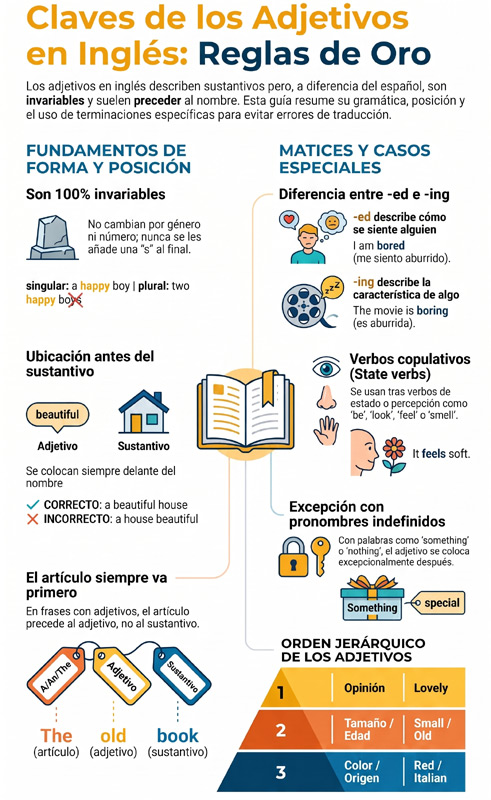

 Translation


 Dictation